- Home
- News
- Around MMA
- Kyoji Horiguchi’s Almabayev win strengthens the decision case, not the takedown-defense case
Kyoji Horiguchi’s Almabayev win strengthens the decision case, not the takedown-defense case
Horiguchi won despite extended wrestling pressure, reinforcing his durability and scoring craft while leaving a clear matchup dependency for future grappling-heavy fights.
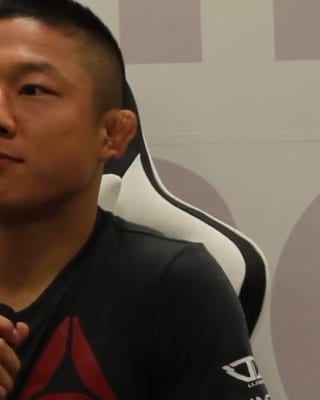
Kyoji Horiguchi left UFC Qatar with a unanimous-decision win over Asu Almabayev, but the result requires more care than the phrase “overcame the wrestling” suggests. Cageside Press reported that the judges returned scores of 30-27, 30-27 and 29-28 after Almabayev repeatedly secured takedowns and control but struggled to improve position or create meaningful damage.
That distinction drives the betting analysis. Horiguchi did not demonstrate that opponents can no longer put him on the floor. He demonstrated that being underneath him does not necessarily remove his offense, composure or ability to influence the scorecards.
The win moves the 36-year-old Horiguchi to 36-6 with one no contest. He entered the event ranked No. 5 at flyweight and has now won three of his last four, sandwiching decisions over Amir Albazi and Almabayev and a third-round submission of Tagir Ulanbekov around a third-round knockout loss to Manel Kape.
Control did not settle the scoring argument
Almabayev’s wrestling created the strongest visual argument against Horiguchi. He completed takedowns, held extended top position and repeatedly forced Horiguchi toward the fence. But control is only one part of the scoring equation, particularly when the controlling fighter does little with the position.
Horiguchi stayed active from inferior spots. He threatened with guillotines and struck the body while seated against the fence. That offense mattered because Almabayev’s top time did not consistently produce positional advances, submission danger or damaging ground strikes. The mechanical lesson is not that control can be ignored; it is that low-output control leaves room for the bottom fighter to reclaim the round through more effective work.
For bettors, that complicates future takedown-based reads. Horiguchi’s career takedown defense stands at 61 percent, a figure that already describes resistance rather than shutdown defense. Almabayev confirmed that a committed wrestler can still reach Horiguchi’s hips and hold him down. A future opponent’s ability to convert those entries into damage will matter more than takedown volume alone.
More from the desk

Josh Hokit’s rematch adjustments start with solving Ciryl Gane’s late-round economy
Greg Jackson’s read on Gane’s measured late surge reframes the potential rematch around pace, defensive exposure and whether Hokit can turn his wrestling into sustained control.
Dricus Du Plessis’ next fight won’t be Chimaev — and the opponent will determine the bet
Du Plessis has an agreement for an early-2027 return, but an unsigned booking against an unnamed opponent leaves bettors with a matchup framework rather than an actionable position.