
- Home
- News
- Around MMA
- Tom Aspinall’s January eye tests set the next checkpoint, not a UFC return
Tom Aspinall’s January eye tests set the next checkpoint, not a UFC return
Aspinall’s explosive historical profile still points toward short fights, but medical clearance, a 390-day absence and no booked opponent leave bettors without an actionable position.

Tom Aspinall finally has a date for the next consequential step in his recovery, but not for his return to competition. MMA Mania reported that Aspinall told a fan he faces “further tests late January” after multiple eye surgeries and a September sparring incident aggravated the injury, leading him to vacate the heavyweight title on Sept. MMA Mania reported the date as September 14, 2026.
That distinction matters. A medical test can produce clarity, another delay or something in between. It does not establish clearance, a training schedule or a booking.
The heavyweight division has already advanced without Aspinall, while his competitive status remains unusually strong for an inactive former champion. He was still ranked No. 1 at heavyweight and No. 8 pound-for-pound as of Nov. 17. The unresolved question is whether the fighter who eventually returns can reproduce the pace and finishing pressure behind those rankings.
January is an information point, not a betting signal
Aspinall’s last bout came against Ciryl Gane on Oct. 25, 2025, ending in a first-round no contest. He has now gone 390 days without competing. There is no opponent or bout attached to the latest update, so bettors cannot responsibly convert the January test date into a position.
What changed is the timetable for new medical information. Why it matters is straightforward: Aspinall’s historical game depends on fast reads, clean entries and immediate offensive production. His career rate of 7.63 significant strikes landed per minute reflects an aggressive heavyweight who does not spend long periods gathering data. Any uncertainty involving vision is therefore relevant to the mechanics of his style, even though the available information does not establish that his performance has deteriorated.
That caveat is essential. The injury and inactivity create questions; they do not answer them. There is no evidence in the packet showing reduced reaction time, altered striking defence or diminished ability to enter exchanges. Treating the eye issue as proof of decline would go beyond the record.
- Record
- 15-3-0 (1 NC)
- Age
- 33
- Height
- 6'5"
- Reach
- 78"
- Weight
- 255 lb
- Stance
- Orthodox
When Aspinall is booked, the most sensitive markets will be total rounds, whether the fight reaches the distance, method of victory and round betting. Significant-strike props could also move sharply depending on whether he resumes his usual high-output approach or works more cautiously after the layoff. Until he is cleared and paired, those are monitoring points rather than recommendations.
Aspinall’s established profile compresses fights
The existing data describes one of the most front-loaded records in the division. Across 10 archived bouts, Aspinall went 8-1 with one no contest. All eight recorded wins ended inside the distance: six by knockout or technical knockout and two by submission. He did not record a decision win in that sample.
The round-level evidence is just as concentrated. Those 10 bouts produced only 11 rounds of data. Aspinall landed 175 significant strikes at 68 percent accuracy, scored five knockdowns and completed four takedowns at 80 percent accuracy. He also generated two submission attempts and five minutes of control.
His target selection helps explain how he creates early damage. Of the 175 significant strikes landed, 119 went to the head, compared with 23 to the body and 33 to the legs. He is not merely accumulating broad, low-impact volume. His attack has been heavily directed toward the target most likely to produce a heavyweight finish.
The grappling numbers add a second finishing route. Aspinall averages 2.62 takedowns and 1.3 submission attempts per 15 minutes, with 100 percent takedown defence in the recorded career statistics. An opponent who responds to his hand speed with a high guard or uncontrolled retreat can still be forced into wrestling exchanges. That matters for method-of-victory markets because an Aspinall finish does not have to come from a single striking mechanism.
His three completed victories immediately before the Gane no contest all ended by first-round knockout or technical knockout: Marcin Tybura in 2023, Sergei Pavlovich later that year and Curtis Blaydes in 2024. The historical case for early-fight markets is therefore mechanical, not just a product of a winning streak. Aspinall combines high accuracy, head-focused offence, knockdown production and credible takedown threats before opponents have much time to settle.
The same record leaves a major late-round blind spot
Aspinall’s finishing record is powerful evidence of what has happened, but it provides limited evidence about what happens if his first layer of offence fails. Eleven tracked rounds across 10 bouts offer almost no basis for judging sustained output, defence or decision-making deep into a long fight.
- D/NCCiryl GaneNo contest · R1Sat, Oct 25, 2025
- WCurtis Blaydes titleKO/TKO · R1Sat, Jul 27, 2024
- WSergei PavlovichKO/TKO · R1Sat, Nov 11, 2023
- WMarcin TyburaKO/TKO · R1Sat, Jul 22, 2023
- LCurtis BlaydesKO/TKO · R1Sat, Jul 23, 2022
- ko tko
- submission
- decision
That limitation becomes more important after 390 days away. His career numbers show 3.62 significant strikes absorbed per minute and 56 percent striking defence, but those rates were built largely in short fights. They cannot tell bettors how his defence holds up after extended exchanges, whether his pace changes over later rounds or how a return from the eye injury might affect his willingness to trade.
The next opponent will determine which uncertainty matters most. A durable opponent capable of surviving the opening exchanges would test the least-developed portion of Aspinall’s statistical profile. A strong defensive wrestler could reduce his secondary finishing route. A similarly aggressive heavyweight could instead recreate the brief, volatile conditions in which Aspinall has historically excelled.
Bout length will matter too. The difference between a three-round and five-round assignment changes the value of an early-finish history when the fighter has almost no established late-round sample. None of those variables is known yet.
What bettors should require before acting
The late-January tests create a sequence to follow: medical outcome, training continuity, opponent, bout length and then the available markets. Skipping those steps would turn a useful update into unsupported speculation.
Totals from PropBetEdge's round-by-round archive — 10 bouts, 11 rounds. These are totals from the bouts we hold complete round data for, not career averages.
| Tom Aspinall | |
|---|---|
| 175 | Significant strikes landed |
| 68 | Striking accuracy % |
| 5 | Knockdowns |
| 4 | Takedowns landed |
| 80 | Takedown accuracy % |
| 5 | Control minutes |
| 2 | Submission attempts |
- head 119
- body 23
- leg 33
If Aspinall returns without a long rebuilding period, his archived profile will continue to support scrutiny of early-round finishes, short total-round positions and knockout or submission outcomes. If his approach changes toward lower output and reduced exposure, significant-strike totals and fight-duration markets could be affected before the win-loss market tells the full story.
But no such change has been demonstrated. The strongest current conclusion is narrower: Aspinall’s pre-injury data is built on extreme fight compression, while his medical status and long absence introduce uncertainties that the historical sample cannot resolve. January may tell bettors when to begin evaluating a return. It does not yet tell them what to bet.
First reported by MMA Mania on Thu, Nov 19, 2026. PropBetEdge read that report and analysed the development against its own UFC records — fighter profiles, bout history, round-by-round statistics, rankings and Fight DNA.
Also reported by MMA Fighting and Sherdog.
What this article knows—and what it cannot know.
- Original report linked
- 5 first-party data families attached
- 2 corroborating reports linked
- 3 charts drawn from the fact packet
- PropBetEdge cannot independently observe undisclosed injuries, private camp conditions, late game-plan changes, or a fighter’s current physical condition. Those factors enter an article only when a named, timestamped source reports them.
- A verified two-fighter comparison was not available for this story.
- No verified market snapshot was attached when this analysis was published.
Publication method: automated editorial analysis from a fixed evidence packet. Human review is not implied unless it is explicitly stated on the article.
PropBetEdge uses AI-assisted editorial analysis grounded in a verified fact set. Every numerical claim in this article is checked automatically before publication: it must either appear in our own first-party data, or be attributed in the same sentence to the reporting it came from. Charts are drawn directly from those verified figures rather than written by the model.
Read our Editorial & Data Methodology → · Last updated Thu, Nov 19, 2026
More from the desk

Josh Hokit’s rematch adjustments start with solving Ciryl Gane’s late-round economy
Greg Jackson’s read on Gane’s measured late surge reframes the potential rematch around pace, defensive exposure and whether Hokit can turn his wrestling into sustained control.
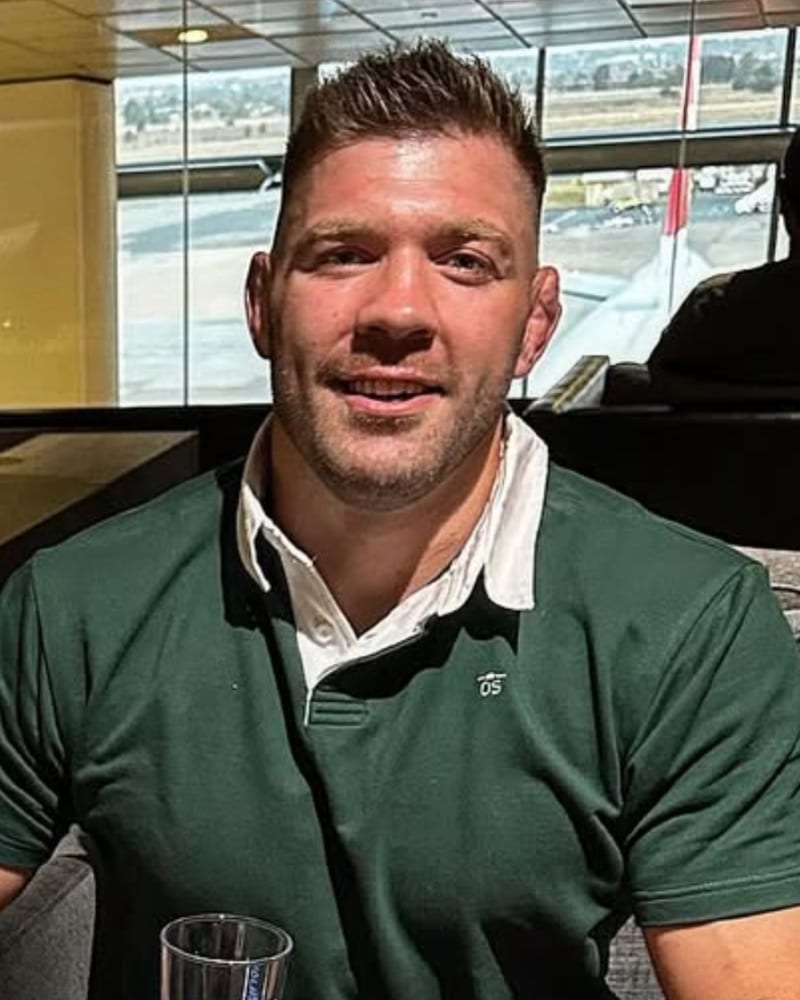
Dricus Du Plessis’ next fight won’t be Chimaev — and the opponent will determine the bet
Du Plessis has an agreement for an early-2027 return, but an unsigned booking against an unnamed opponent leaves bettors with a matchup framework rather than an actionable position.
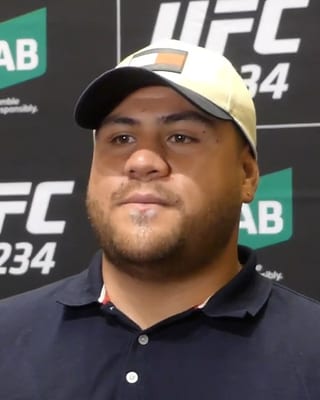
Tai Tuivasa’s Reported UFC Sydney Return Extends His Run — Not Yet a Betting Edge
Tuivasa’s recent durability complicates his knockout-heavy profile, but an unconfirmed matchup and absent market leave bettors with questions rather than a playable position.