
- Home
- News
- Fight preview
- UFC Fight Night: Rosas Jr. vs. Barcelos bettor’s guide: the market questions that matter before Raul Rosas Jr. vs. Raoni Barcelos
UFC Fight Night: Rosas Jr. vs. Barcelos bettor’s guide: the market questions that matter before Raul Rosas Jr. vs. Raoni Barcelos
A card-level PropBetEdge read of the strongest verified matchup variables, the markets they touch and the counter-cases bettors should keep in view before price enters the equation.
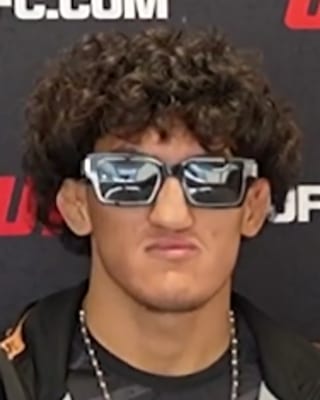
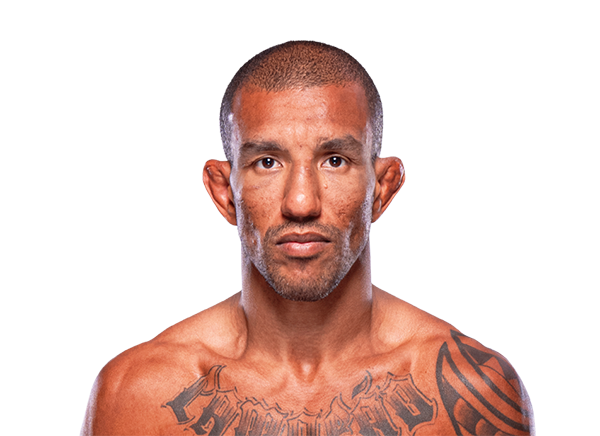
- Raul Rosas Jr. vs orthodox opponents 83% 6 bouts · medium
- Finish history vs orthodox opponents 40% 5 bouts · medium
- Raul Rosas Jr. R3 pace retention 72% 7 bouts · medium
- Raoni Barcelos R3 pace retention 172% 15 bouts · high
- R3 pace retention mismatch -100% 7 bouts · medium
- Takedown attempts / 15 min mismatch 4.56/15 7 bouts · medium
- Takedown accuracy mismatch 23% 7 bouts · medium
- Raul Rosas Jr. finish rate 43% 7 bouts · medium
- Raoni Barcelos finish rate 36% 11 bouts · high
Derived evidence with its sample; it informs the read above and is not a pick.
PropBetEdge already has a verified bout-level preview for each matchup selected below. This card guide does a different job: it pulls the strongest bettor-facing variables into one map so the card can be read as a market, not as a stack of unrelated fights.
The discipline is the same across every section. A reach edge, takedown rate, finishing pattern or pace gap is not value by itself. It tells us what the eventual price has to account for. Until a verified market is stored, the useful question is where the evidence is strongest, where it is fragile, and which assumption a bettor should test first.
Across UFC Fight Night: Rosas Jr. vs. Barcelos, the current fact packets connect most often to moneyline, fight-goes-distance, total-rounds, method-of-victory, round, significant-strike, takedown. That is a watch list, not a recommendation. The point is to know which numbers matter before the market gives those numbers a price.
The card-level betting map
These are the highest-impact matchup reads in the current PropBetEdge fact blocks. They are ordered by bettor impact first and card position second, so a prelim with a clearer measurable mismatch can outrank a bigger-name fight with less separation in the data.
Raul Rosas Jr. vs. Raoni Barcelos
Raoni Barcelos's takedown rate (2.51 per 15 minutes) meets a 25% takedown defence, which makes Raul Rosas Jr.'s ability to stay upright the variable the rest of the fight hangs on. Five scheduled rounds put the total-rounds market in play in a way a three-round bout does not. Markets logically connected to that evidence: total rounds, round betting, significant strikes, takedowns. No price or model output exists yet, so this is a read on what to monitor, not a pick.
Raul Rosas Jr. is the younger by 18 years (21 to 39). Raoni Barcelos lands 3.31 more significant strikes per minute (4.65 to 1.34). Raul Rosas Jr. absorbs 3 fewer significant strikes per minute (1.24 to 4.24).
The counter-case matters here: Career averages are career-to-date snapshots at capture; they include fights outside this matchup context and are not as-of figures.
Before treating the read as actionable, watch this: Weigh-in: a missed weight or catchweight rebooking changes the physical read above.
The full bout preview keeps the complete tape, recent form and matchup context together: Why Raul Rosas Jr.'s takedown defence is the key variable against Raoni Barcelos.
Brady Hiestand vs. Rinya Nakamura
Rinya Nakamura's takedown rate (2.58 per 15 minutes) meets a 42% takedown defence, which makes Brady Hiestand's ability to stay upright the variable the rest of the fight hangs on. Markets logically connected to that evidence: fight goes the distance, method of victory, round betting, takedowns. No price or model output exists yet, so this is a read on what to monitor, not a pick.
Brady Hiestand holds 2.5 inches of reach on Rinya Nakamura (71" to 68.5"). Rinya Nakamura absorbs 2.03 fewer significant strikes per minute (1.72 to 3.75). Rinya Nakamura's striking defence is 12 points higher (63% to 51%).
The counter-case matters here: Brady Hiestand will have been out 833 days by fight night on our archive dates: a long layoff the averages cannot price.
Before treating the read as actionable, watch this: Weigh-in: a missed weight or catchweight rebooking changes the physical read above.
The full bout preview keeps the complete tape, recent form and matchup context together: Why Brady Hiestand's takedown defence is the key variable against Rinya Nakamura.
Josiah Harrell vs. Elves Brener
Elves Brener brings both the length (4.5 inches of reach) and the higher output (4.76 to 2.32 significant strikes per minute), the combination that most often turns a reach edge into round control. Markets logically connected to that evidence: moneyline, fight goes the distance, method of victory, significant strikes. No price or model output exists yet, so this is a read on what to monitor, not a pick.
Elves Brener holds 4.5 inches of reach on Josiah Harrell (72.5" to 68"). Elves Brener lands 2.44 more significant strikes per minute (4.76 to 2.32). Elves Brener absorbs 5.08 fewer significant strikes per minute (5.86 to 10.94).
The counter-case matters here: Josiah Harrell has only 1 archived UFC bout in the PropBetEdge database, so the form read is thin.
Before treating the read as actionable, watch this: Weigh-in: a missed weight or catchweight rebooking changes the physical read above.
The full bout preview keeps the complete tape, recent form and matchup context together: Josiah Harrell vs. Elves Brener: the reach and pace mismatch bettors should watch.
Rodolfo Bellato vs. Christian Edwards
The measurable edge on file is Christian Edwards's 3.5 inches of reach; without UFC Stats pace figures for this pairing it is a range advantage, not yet a proven output advantage. Markets logically connected to that evidence: fight goes the distance, method of victory, significant strikes. No price or model output exists yet, so this is a read on what to monitor, not a pick.
Christian Edwards holds 3.5 inches of reach on Rodolfo Bellato (78.5" to 75"). Rodolfo Bellato lands 2.97 more significant strikes per minute (5.37 to 2.4). Christian Edwards absorbs 3.46 fewer significant strikes per minute (2.4 to 5.86).
The counter-case matters here: Christian Edwards has only 1 archived UFC bout in the PropBetEdge database, so the form read is thin.
Before treating the read as actionable, watch this: Weigh-in: a missed weight or catchweight rebooking changes the physical read above.
The full bout preview keeps the complete tape, recent form and matchup context together: Rodolfo Bellato's finishing rate is the number that matters against Christian Edwards.
Rodolfo Vieira vs. Robert Bryczek
Rodolfo Vieira's finishing rate (5 of 6 archived wins) is the number that shapes this matchup; Robert Bryczek has been never finished in 3 archived bouts. Markets logically connected to that evidence: moneyline, fight goes the distance, method of victory, round betting. No price or model output exists yet, so this is a read on what to monitor, not a pick.
Robert Bryczek holds 2 inches of reach on Rodolfo Vieira (75" to 73"). Rodolfo Vieira averages 2.51 more takedowns per 15 minutes (2.87 to 0.36). Robert Bryczek defends takedowns at 71% against 60% for Rodolfo Vieira.
The counter-case matters here: Career averages are career-to-date snapshots at capture; they include fights outside this matchup context and are not as-of figures.
Before treating the read as actionable, watch this: Weigh-in: a missed weight or catchweight rebooking changes the physical read above.
The full bout preview keeps the complete tape, recent form and matchup context together: Rodolfo Vieira's finishing rate is the number that matters against Robert Bryczek.
What not to overprice
The easiest mistake on a full card is to turn every measurable difference into the same kind of edge. They are not the same. Length only matters if a fighter can keep the fight at range. Takedown activity only matters if entries turn into useful control or offense. A finishing rate is a history of outcomes, not a promise that the next opponent will cooperate.
That is why the risk side of the fact block is part of the article rather than a disclaimer after it. A strong bettor read should make the counter-case easier to see, not hide it. When a matchup has thin UFC-level history, the correct response is to demand more from the eventual price, not to fill the missing sample with confidence.
Where price changes the answer
Once verified prices arrive, the job changes. A matchup can have a real stylistic or statistical edge and still be a bad bet if the market has charged too much for it. The inverse is also true: a fight that looks close in raw matchup data can become interesting if the market forces one side to carry too much of the uncertainty.
PropBetEdge therefore keeps the market layer separate from the matchup layer. The current guide says what should move attention. A later market snapshot is what tells us whether that attention has already been priced in.
What to watch before betting
- Weigh-in: a missed weight or catchweight rebooking changes the physical read above.
- Confirm the bout stays scheduled for five rounds; a move to three compresses the total-rounds market.
- Line movement once priced: takedown and control props are where the grappling mismatch would first show.
- Confirm card position and scheduled rounds on fight week.
- Line movement once priced: a fight-goes-distance line that drifts against the finish-rate read is the first signal to re-examine.
Bettor’s bottom line
The advantage of card-level coverage is not that every fight becomes a pick. It is that the bettor can separate strong evidence, mixed evidence and missing evidence before emotion or price movement compresses them into one story.
UFC Fight Night: Rosas Jr. vs. Barcelos already has deep bout-by-bout coverage underneath this guide. Use this page to decide where to spend attention; use the individual previews to understand the matchup; and wait for verified price before calling any of it value.
More from the desk

Khamzat Chimaev’s injury deadline shifts the betting question from form to readiness
Chimaev’s dominant grappling record still defines his profile, but a possible break for medical treatment would make timing and workload central to his next betting market.
Jean Silva’s knockout disclosure changes the risk profile behind his latest finish
Silva’s third-round submission strengthened his featherweight résumé, but reports of repeated camp knockouts make durability and early-fight markets harder to assess in his next booking.