
- Home
- News
- Fight preview
- UFC Fight Night: Buckley vs. Malott bettor’s guide: five matchup questions to investigate
UFC Fight Night: Buckley vs. Malott bettor’s guide: five matchup questions to investigate
Finishing histories shape the five-round main event, while pace, takedown defence and reach define the card’s other strongest evidence — but no verified odds or model prices exist yet.

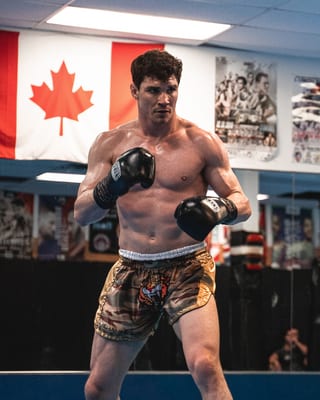
Joaquin Buckley and Mike Malott bring finishing histories into a main event that can run 25 minutes, making duration the central tension at UFC Fight Night: Buckley vs. Malott on October 17 in Edmonton. Buckley has finished 8 of 11 archived UFC wins, while Malott has finished 6 of 8. That is meaningful evidence for the fight-goes-distance, total-rounds, method-of-victory and round markets — but it is not yet a bet.
No verified odds snapshot or model price exists for this bout, or for the other highlighted matchups at Rogers Place. The task before prices arrive is narrower: identify which variables deserve attention, understand the counter-case and avoid turning a statistical difference into unsupported certainty.
Buckley vs. Malott: finishing history gets five rounds
Buckley’s clearest measurable advantage is length. His 76-inch reach is 3 inches longer than Malott’s 73 inches. Buckley also owns the higher recorded takedown-defence rate, 70% to 57%.
Those figures offer a plausible framework for how Buckley could manage range and resist changes of level, but the available packet does not include round-level pace figures for this pairing. The reach advantage therefore cannot be called a proven output advantage. It identifies a question for the moneyline and significant-strike markets rather than answering it.
Duration supplies the stronger card-level hook. Buckley has finished 73% of his 11 archived UFC wins; Malott has finished 75% of his eight. Because the main event is scheduled for five rounds, those finishing profiles have a 25-minute runway rather than the 15 minutes available in a three-round fight.
That expands the relevance of the fight-goes-distance, total-rounds, method-of-victory and round markets. It does not prove an early ending, and the career averages are career-to-date snapshots captured across fights outside this specific matchup. They are not as-of figures.
The full matchup treatment is here: Joaquin Buckley vs. Mike Malott: two finishers and a fight-goes-distance question.
Nallo vs. Landwehr: when length comes with pace
Mandel Nallo’s 3-inch reach advantage over Nate Landwehr is reinforced by a substantial difference in recorded activity. Nallo lands 8.26 significant strikes per minute to Landwehr’s 5.55, a gap of 2.71. His takedown-defence rate is also 100%, compared with Landwehr’s 71%.
Unlike an isolated reach measurement, the combination of length and output suggests a potential route to controlling where exchanges occur and how rounds are scored. That makes the moneyline and significant-strike categories the most direct areas to investigate, with fight-goes-distance and method-of-victory also connected to the matchup. Landwehr has finished 3 of 5 archived UFC wins, or 60%.
The major restraint is sample size. Nallo has only two archived UFC bouts in the PropBetEdge database, so his form read is thin. His eye-catching pace and takedown-defence figures should not be treated as settled expectations, and all career averages here remain snapshots that include other matchup contexts.
Read the bout-level analysis at Mandel Nallo vs. Nate Landwehr: the reach and pace mismatch bettors should watch.
Barriault vs. Daukaus: competing paths to the same finish question
Marc-Andre Barriault and Kyle Daukaus both carry notable finishing records in the archive. Barriault has finished 4 of 6 UFC wins, or 67%; Daukaus has finished 3 of 5, or 60%. That points attention toward fight-goes-distance, method-of-victory and round betting, but the underlying statistics show different ways the fight could develop.
Barriault lands 5.65 significant strikes per minute to Daukaus’s 3.16, a 2.49-strike advantage. Daukaus, however, absorbs only 2.94 significant strikes per minute against Barriault’s 5.94. Daukaus also has a 2-inch reach advantage, 76 inches to 74, and averages 1.97 takedowns per 15 minutes compared with Barriault’s 0.34.
The bettor-facing question is not simply whether these finish rates point away from the final bell. It is whether Barriault’s higher output or Daukaus’s lower absorption, length and greater takedown activity proves more influential. The numbers support investigation of the significant-strike and finish-related markets, not a conclusion about which path wins out.
As elsewhere on the card, these career averages include fights beyond this matchup and are not as-of figures. The detailed preview is Marc-Andre Barriault vs. Kyle Daukaus: two finishers and a fight-goes-distance question.
Croden vs. Chandler: the takedown test that can reorder the fight
Melissa Croden averages 2.02 takedowns per 15 minutes. Chelsea Chandler’s recorded takedown defence is 25%. That collision makes Chandler’s ability to remain upright the foundational question for the moneyline, takedown, method-of-victory, round and fight-goes-distance markets.
Croden’s broader defensive numbers strengthen the case for concentrating on that phase. She absorbs 2.13 significant strikes per minute to Chandler’s 4.27, a difference of 2.14, and her striking defence is 59% against Chandler’s 40%. Croden also averages 0.81 more takedowns per 15 minutes than Chandler, 2.02 to 0.81, while defending takedowns at 66% to Chandler’s 25%.
Chandler has nevertheless finished 2 of 3 archived UFC wins, or 67%. That supplies the counterweight to any overly clean reading of Croden’s statistical advantages. The figures describe career-to-date performance across other contexts; they do not establish that every Croden entry will become control or offense.
The matchup’s central variable is explored further in Why Chelsea Chandler's takedown defence is the key variable against Melissa Croden.
Boser vs. Diniz: a clear measurement with limited reach
Jhonata Diniz owns the card’s largest listed reach difference among these five matchups: 79.5 inches to Tanner Boser’s 75.5, a 4-inch advantage. Without round-level pace figures for the pairing, however, that remains a range advantage rather than evidence that Diniz will produce more offense.
Boser has finished 3 of 5 archived UFC wins, or 60%, connecting the matchup to fight-goes-distance and method-of-victory alongside significant strikes. Yet the most important uncertainty is Diniz’s inactivity: he will have been out 371 days by fight night according to the archive dates. That is a long layoff the existing averages cannot price.
Career averages again are snapshots rather than matchup-specific or as-of figures. More context is available at Tanner Boser vs. Jhonata Diniz: the 4-inch reach edge that frames the heavyweight prelim.
Bettor’s Edge: what changes the read
The evidence ranks the questions; it does not establish value. Length matters only if the longer fighter maintains range. Takedown activity matters only if attempts become useful control or offense. Finishing percentages summarize past outcomes rather than guarantee the next one.
Before treating any angle as actionable, confirm the card positions and scheduled rounds on fight week. The main event must remain scheduled for five rounds; a move to three would compress the total-rounds market. Weigh-ins also matter because a missed weight or catchweight rebooking would alter the physical reads above.
Once verified prices exist, line movement can add another test. A fight-goes-distance line moving against the archived finish-rate read would be a reason to re-examine the evidence, not automatically oppose the market.
For now, there is no verified price, model output, pick or demonstrated betting edge. The strongest approach is to separate robust evidence from thin samples, especially with Nallo’s two archived UFC bouts and Diniz’s 371-day layoff, then ask whether the eventual market has accounted for those uncertainties.
More from the desk


Jai Herbert’s upset of Matheus Camilo changes the betting read on his late-career wins
Herbert cashed at prices as high as +165 by surviving Camilo’s grappling pressure and turning defensive sequences into decisive offense.


Andre Fili’s Head-Kick Knockout Changes the Prop Conversation, Not His Whole Profile
Fili snapped a two-fight skid with a second-round knockout, but his larger UFC sample still points to a versatile decision winner carrying meaningful defensive risk.
Updated PropBetEdge UFC Desk