
Brady Hiestand’s submission of Rinya Nakamura resets the next betting conversation
Hiestand reinforced an existing finishing profile while handing Nakamura a new archived loss condition, but missing odds and round data sharply limit what bettors can claim from the result.


Brady Hiestand changed the most important result-level fact in Rinya Nakamura’s archive: Nakamura can no longer be described as a fighter who has never been finished in the stored sample.
Hiestand submitted Nakamura with a rear-naked choke in the second round at 4:07 at UFC Fight Night: Rosas Jr. vs. Barcelos in Las Vegas. Before the bout, Nakamura had been finished zero times across seven archived appearances. After it, his archive contains one finish loss across eight appearances.
That is meaningful new evidence for future fight-goes-distance and method-of-victory analysis. It is not, by itself, proof of a repeatable betting edge.
The distinction matters because no verified pre-fight odds snapshot is attached to this result, no current market price is available and no model output is available. This is a profile reset rather than a declaration that the previous market was wrong.
Hiestand confirmed a finishing path rather than discovering one
Hiestand entered with two finishes in three archived wins, a 67% finish rate within that winning sample. The submission moved his stored archive from three wins in four appearances, with two finishes, to four wins in five appearances, with three finishes.
In other words, the winning method fits the profile already on file. Hiestand did not arrive with a decision-only pattern and suddenly produce an unsupported outlier. The result supplied another example of an established finishing route.
That confirmation is the central bettor takeaway. The next method-of-victory market involving Hiestand will have to account for another submission win, while the next fight-goes-distance assessment must include a larger archived finishing sample. Neither point determines which side of those markets will be attractive. Opponent, matchup and price remain necessary.
The counter-case is sample size. Hiestand’s pre-fight archive covered four appearances, and one additional result cannot establish a career-wide law. The result updates the profile; it does not make every future Hiestand matchup equivalent to this one.
His layoff context also belongs in the record. The packet lists 833 days since his previous appearance, while Nakamura’s interval was 420 days. Those facts provide context for the matchup, but the available evidence does not establish how either interval affected the finish. Assigning a performance cause to either number would go beyond the result packet.
Nakamura’s durability profile took the clearer hit
Nakamura entered with six wins and one loss across seven archived bouts. More important for totals and method markets, he had not been finished in that sample.
Hiestand’s submission creates a new losing condition in the database. Nakamura’s archive now stands at six wins and two losses across eight appearances, with one finish defeat. Future analysis can no longer treat his prior resistance to being stopped as unbroken.
That does not mean Nakamura should automatically be treated as fragile or as a default candidate to lose inside the distance. The new evidence is one submission, not a broad pattern of repeated stoppage losses. The responsible reset is narrower: an assumption that previously had no archived exception now has one.
This is where bettors can easily overcorrect. A vivid finish can carry more psychological weight than its sample value warrants. Nakamura’s next matchup packet should preserve both sides of the record: seven archived bouts without a finish loss before Hiestand, followed by a submission defeat in the next appearance.
The opponent will decide how much that result matters. Without the next booking, there is no basis for saying whether the submission loss should dominate the analysis or sit as a secondary consideration.
The card was finish-heavy, but that is not a transferable forecast
The stored event contains seven completed bouts. Five ended inside the distance: four by KO/TKO and one by submission. Two reached the judges, including one split decision. Two finishes occurred in the opening round.
Yazmin Jauregui recorded the card’s fastest finish, stopping Vanessa Demopoulos by KO/TKO at 1:02 of the opening round. Elves Brener stopped Josiah Harrell by KO/TKO at 4:14 of that round. Montel Jackson finished Ricky Simon by KO/TKO in the second round at 2:39, while Christian Edwards stopped Rodolfo Bellato by KO/TKO in the third at 1:47.
The two decisions produced different forms of scorecard evidence. Rodolfo Vieira defeated Robert Bryczek by unanimous decision, with all three listed judges scoring it 30-27. Alatengheili defeated John Castaneda by split decision, with listed scores of 29-28, 28-29 and 28-29.
Those results describe the event, not a betting rule for the next one. A card on which five of seven bouts ended early does not establish that an unrelated card, weight class or matchup should inherit the same finish expectation. Event totals can frame what happened, but fighter and matchup evidence must determine what travels forward.
The same caution applies within this card. Hiestand’s submission belongs specifically to the profiles of Hiestand and Nakamura. The four KO/TKO results elsewhere do not make that submission more repeatable, and the two decisions do not reduce its relevance.
Missing round data limits the technical interpretation
The result establishes who won, when the bout ended and how it ended. It does not provide the underlying round-level differentials needed to explain the route in detail.
PropSports round data for Hiestand-Nakamura is not in the stored tables. Striking, takedown and control differentials therefore are not available. The packet also lists no stored round statistics for any of the seven bouts.
That absence prevents a more ambitious claim about pace, range or control. The evidence does not show whether Hiestand consistently imposed the phase that produced the submission, whether Nakamura had been winning other phases, or how much sustained control preceded the finish. The rear-naked choke is verified; a detailed statistical story about how the fight reached it is not.
This matters for betting because identical methods can emerge from very different performances. A result-only packet can confirm a finishing path, but it cannot establish the repeatability of every sequence that led there.
New round data would materially improve the read. Until it arrives in the tables, technical conclusions should remain narrower than the result itself.
What the next markets must absorb
The supported categories for reassessment are fight goes the distance and method of victory.
For Hiestand, the next prices in those markets must absorb a submission that aligns with his prior finishing record. For Nakamura, they must absorb the first finish loss in his stored sample. Those are profile changes, not market recommendations.
There is no verified pre-fight price here, so the result cannot be graded as closing-line value, a bad beat or a mispriced market. There is also no current price and no model output. Any claim that a betting edge already exists would exceed the available evidence.
Three developments would sharpen the next evaluation: confirmed bookings for both fighters, an opening line connected to each matchup, and any rankings snapshot movement for Hiestand. The booking identifies the relevant opponent. The opening line allows comparison between the updated archive and an actual market. Rankings movement can alter likely matchmaking more than it changes a market by itself.
Bettor’s edge: preserve the update without buying the overreaction
The cleanest post-fight read is that Hiestand strengthened an existing finishing profile and Nakamura acquired a new durability exception.
What changed is concrete: Hiestand added another archived finish, and Nakamura was finished for the first time in the stored sample. What did not change is equally important: one bout does not establish a universal expectation for either fighter, and the missing odds and statistical layers prevent a claim of value or technical dominance.
The next market should be evaluated from that balanced starting point. Carry forward the submission, the prior samples and the caveats together. Until an opponent and verified price exist, this remains a bettor reset—not a retroactive pick and not a prediction.
More from the desk
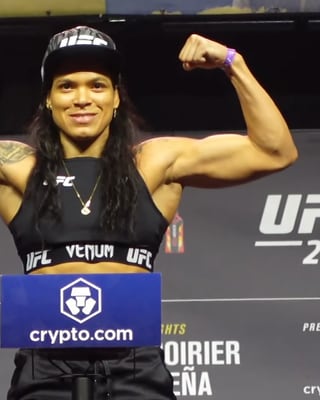
Amanda Nunes’ scouting claim adds intrigue, not proof, against Kayla Harrison
Nunes says old sparring sessions exposed persistent flaws, but the UFC 334 matchup will turn on whether her proven takedown defence survives a 1,229-day layoff.

Lone’er Kavanagh’s variety meets Ramazan Temirov’s concentrated power at UFC 333
Temirov’s five knockdowns create the obvious danger, but Kavanagh’s reach, target diversity and deeper grappling record complicate every finish-based betting angle.